Showing posts with label Ghost Stories. Show all posts

Witch’s Grave in Katy, Texas: The Magnolia Cemetery Legend


In a quiet Texas cemetery, an ordinary gravestone became the center of a chilling legend. Some say its words bring bad luck. Others tell stories of a mysterious stone sphere that seemed to defy gravity. But who was the woman buried beneath the monument—and how did her grave become known as the Witch’s Grave?

A Cemetery Hiding a Dark Mystery

In the historic town of Katy, Texas, not far from Houston, lies Magnolia Cemetery, a burial ground dating back to around 1900.

Among its weathered gravestones is one that has attracted generations of curious visitors. It belongs to Barbara A. Snyder, a German immigrant who died in 1911.

Today, her grave is widely known by a much darker name: the Witch’s Grave.

There are no verified historical records establishing that Barbara Snyder practiced witchcraft. Yet, over the years, local folklore has transformed her resting place into one of Katy’s best-known supernatural legends.

The mystery began not with a documented act of magic, but with a few haunting words carved into stone.

The Epitaph That Sounds Like a Warning

The inscription on the monument addresses anyone who pauses to read it:

“Remember me as you pass by,
As you are now, so once was I:
As I am now, you soon shall be,
Prepare for death and follow me.”

The verse is a traditional reflection on mortality, reminding the living that death eventually comes to everyone.

But imagine encountering those words in a quiet cemetery, surrounded by old trees and weathered headstones.

Read in that setting, the inscription can feel less like a simple reminder of death and more like a personal warning.

Over time, that unsettling impression became the foundation of the Witch’s Grave legend.

The Curse of the Witch’s Grave

According to local folklore, visitors who read the inscription must leave a small offering before departing.

Coins are the most commonly mentioned offering.

The legend warns that anyone who reads the words and leaves without paying tribute may suffer bad luck.

Some versions of the story take the curse even further. They claim that visitors who look into a mirror near the grave may see a mysterious figure standing behind them.

When they turn around, however, no one is there.

Are these stories evidence of something supernatural?

There is no reliable evidence proving that the grave carries a curse or that a spirit appears in mirrors. The stories belong to local folklore, passed from one generation to another and repeated by people fascinated by haunted places.

Still, the legend raises an unsettling question: why has this particular grave inspired so much fear?

The Mysterious Stone Sphere

Another part of the legend concerns a large stone sphere that once stood atop the grave monument.

Stories circulated that the sphere could move, glow, or even appear to float above its base.

Some versions claimed that visitors who read the epitaph and looked away would discover that the sphere had shifted or fallen when they looked back.

The tale became especially popular among curious teenagers and people seeking a frightening experience.

According to local accounts, the sphere was eventually removed after the monument attracted unwanted attention and pranks. Reports have associated its removal with the Katy Police Department.

However, the supernatural explanations surrounding the sphere have never been established as fact.

Perhaps the most intriguing part of the story is not whether the stone ever moved on its own, but how an unusual monument became the centerpiece of an enduring urban legend.

Who Was Barbara Snyder?

Behind the frightening nickname was a real person.

Barbara Snyder was a German immigrant who died in 1911. Historical accounts identify her as the woman associated with the famous grave in Magnolia Cemetery.

There is no verified evidence that she was a witch or had any documented connection to the occult.

Her reputation appears to have developed long after her death, shaped by the unusual monument, its somber epitaph, and stories repeated by visitors.

This distinction matters.

A legend can become frightening without being historically true. Sometimes, the mystery surrounding a person's grave reveals more about the living and their imaginations than it does about the person who was buried there.

Barbara Snyder's story is a reminder that folklore can give an ordinary historical site a second life—one filled with rumors, curiosity, and supernatural possibilities.

Is the Witch’s Grave Really Haunted?

The honest answer is that there is no conclusive evidence that the grave is haunted.

Local stories have described strange experiences, mysterious figures, and unusual events connected to the cemetery. Other visitors and paranormal investigators have reported finding nothing unusual.

The contrast between those accounts is part of what keeps the legend alive.

For some people, the Witch’s Grave is simply a historic monument surrounded by an imaginative story. For others, its epitaph and unusual history make it a place they would rather not visit after dark.

Perhaps the power of the legend lies in its simplicity.

A name. A grave. A warning carved in stone.

And a story that invites every visitor to wonder what might happen if the warning were real.

A Final Warning From the Past

The next time you read an old gravestone, consider the words carefully.

They may have been carved to comfort the living, preserve a memory, or remind future generations that life is temporary.

But once a story takes hold, even an ordinary inscription can become something far more mysterious.

In Katy, Texas, the grave of Barbara Snyder remains associated with one question that refuses to disappear:

Is the Witch’s Grave frightening because something supernatural happened there—or because people have spent generations imagining what might happen?

The answer remains uncertain, and that uncertainty is what makes the legend endure.

Would You Visit the Witch’s Grave?

If you found yourself standing before Barbara Snyder’s gravestone, would you read the inscription aloud?

Would you leave a coin before walking away?

Or would you prefer not to test a legend that has frightened curious visitors for generations?

Share your thoughts in the comments, and explore more eerie American legends on Haunted Places of USA.


Read more >>

The Haunting of Fort McIver: A Fictional Georgia Ghost Story

The Haunting of Fort McIver: A Fictional Georgia Ghost Story

An abandoned fictional military fort hidden in a foggy Georgia forest at night

Some places are abandoned by the living. Others are never abandoned by the dead.

A Forgotten Fort in the Georgia Woods

Deep in the forests of Georgia, beyond a narrow road covered with fallen leaves, stood the remains of an old military fort known as Fort McIver.

At least, that was what the locals called it.

The stone walls were crumbling, the wooden watchtower had collapsed years earlier, and weeds had swallowed most of the old parade ground.

No official map showed the fort.

No historical marker stood beside the road.

Yet the people who lived nearby knew one rule: never visit Fort McIver after sunset.

They said that when darkness covered the forest, someone still walked along the old walls.

And whoever heard the footsteps was never quite alone again.

The Warning

Daniel Carter had recently moved to a small town outside Macon, Georgia.

He worked as a freelance photographer, specializing in abandoned buildings and forgotten places. Old factories, empty hospitals, deserted houses—he had photographed them all.

One afternoon, while speaking with an elderly shopkeeper, Daniel mentioned that he was looking for interesting locations to photograph.

The old man stopped smiling.

"There's a place you might want to avoid," he said.

Daniel asked where.

"Fort McIver."

The shopkeeper leaned closer.

"People go there during the day. Some never come back after dark. And if you hear someone calling your name, don't answer."

Daniel laughed politely.

He assumed it was another local ghost story.

But the old man's expression never changed.

The First Visit

Two days later, Daniel drove down a narrow dirt road and parked near the forest.

The remains of Fort McIver appeared between the trees.

He stepped out with his camera and began taking photographs.

The place was beautiful in a disturbing way. Moss covered the stones, twisted branches reached over the walls, and the remains of an old iron gate hung from one hinge.

As Daniel approached the ruined entrance, he noticed something unusual.

A fresh set of footprints crossed the muddy ground.

They led toward the fort.

But none came back.

Daniel followed them, telling himself that another visitor must have been exploring the ruins.

Inside, he photographed the old courtyard and a narrow staircase leading toward what might once have been a lookout platform.

Then he heard a sound.

Three slow knocks.

From somewhere beneath the ground.

He stopped.

"Hello?"

No answer.

He took one last photograph and returned to his car.

Only later, when reviewing the images, did he notice the figure.

Standing in an upstairs window was a man wearing what appeared to be an old military uniform.

Daniel had not seen anyone inside the fort.

The Second Visit

Curiosity eventually overcame caution.

The following Saturday, Daniel returned with a flashlight and a voice recorder.

This time, he arrived just before sunset.

The forest was unusually quiet.

No birds called from the branches. No insects buzzed in the grass.

As he entered the ruins, his recorder began picking up a faint clicking sound.

Click.

Click.

Click.

Daniel moved toward the staircase.

At the bottom, he discovered a narrow wooden door partly hidden behind fallen stones.

It had not been there—or at least he had not noticed it—during his first visit.

The door was slightly open.

Beyond it was a dark passage descending beneath the fort.

Daniel hesitated.

Then he heard a voice.

"Private Carter?"

It sounded like an older man speaking from somewhere underground.

Daniel froze.

His last name was Carter.

He had never told anyone in town that he was visiting the fort.

"Private Carter, report for duty."

The voice came again.

Daniel turned and ran.

The Recording

Back at home, Daniel listened to the recording.

At first, there was only static and the sound of his footsteps.

Then, at approximately 6:42 p.m., the voice appeared.

"Private Carter, report for duty."

But there was something else.

A second voice, quieter and closer to the microphone, whispered:

"He's already here."

Daniel replayed the recording several times.

He could not explain it.

He decided that he would never return.

The Final Photograph

Three nights later, Daniel woke to the sound of knocking.

Three slow knocks.

He sat up and looked toward the bedroom door.

Nothing.

Then his phone vibrated.

An unknown number had sent him a photograph.

It showed the entrance to Fort McIver.

Daniel recognized the stone walls, the broken iron gate, and the staircase.

But the photograph had been taken from inside the ruins.

At the bottom of the image was a message:

YOU LEFT BEFORE THE ROLL CALL.

Daniel called the number.

It was disconnected.

He checked the photograph's details.

The image had been taken at 6:42 p.m.—the exact time recorded on his voice recorder.

He never slept properly again.

The Last Night

A week later, Daniel disappeared.

His car was found near the dirt road leading to Fort McIver.

The driver's door was open.

His camera lay on the passenger seat.

His phone was missing.

Search teams explored the forest and the ruins, but they found no sign of him.

There was only one unusual discovery.

On the stone wall near the entrance, someone had scratched a sentence into the moss-covered surface:

ROLL CALL COMPLETE.

No one knew who had written it.

And no one in the town ever admitted knowing Daniel Carter.

The Legend of Fort McIver

Today, the fictional legend of Fort McIver lives on through the story of a photographer who entered an abandoned military ruin and heard a voice calling him by name.

Some say the soldiers of Fort McIver never received the order to stand down.

Others believe that anyone who enters the ruins after sunset becomes part of an endless military roll call.

But the strangest part of the story is the warning.

If you ever hear a voice calling your name from somewhere beneath the earth, do not answer.

Because the voice may not be asking you to come closer.

It may already be counting you among the dead.


Fiction Disclaimer: Fort McIver, Daniel Carter, and the events described in this story are fictional creations. This is an original supernatural horror story inspired by the atmosphere of abandoned military ruins and Southern Gothic folklore. It is not a documented historical event or verified paranormal case.

What would you do if an unknown voice called your name from an abandoned fort? Share your thoughts in the comments.

Read more >>

The Whispering Echoes

The Whispering Echoes: A Chilling Supernatural Horror Story

An abandoned old Southern house at night with a mysterious shadow visible in an upstairs window

Some voices disappear with time. Others remain trapped in the walls, waiting for someone to listen.

The House That Never Fell Silent

When Emily Morgan inherited her grandmother's old house in rural Georgia, she expected dust, broken furniture, and years of forgotten memories.

She did not expect the whispers.

The house stood at the end of a narrow country road, surrounded by tall trees and an overgrown garden. Its wooden floors creaked with every step, and the upstairs hallway always seemed colder than the rest of the building.

Her grandmother had lived there alone for nearly forty years.

Before her death, she had given Emily one strange instruction:

"Never answer a voice that calls you from an empty room."

Emily had assumed it was simply an old woman's superstition.

Until the first night.

A Voice Behind the Wall

At 2:17 a.m., Emily woke to the sound of someone whispering.

At first, she thought it was the wind moving through the old windows.

Then she heard her name.

"Emily..."

The voice came from the hallway.

She sat up and listened.

"Emily... come here..."

It sounded like a woman speaking softly from behind a closed door.

Emily grabbed her phone and turned on its flashlight.

The hallway was empty.

She checked every room, including the old guest bedroom and the bathroom.

Nobody was there.

But when she returned to her bedroom, she noticed something unusual.

The wooden wall beside her bed was making a faint clicking sound.

Three clicks.

Then a whisper.

"You're not alone."

The Recording

The following evening, Emily placed her phone on a table and started recording audio.

She wanted proof that the sounds were real.

For several minutes, nothing happened.

Then, just after midnight, a faint whisper appeared.

"Don't let her in."

Emily listened again.

A second voice followed.

"She's already inside."

She stopped the recording.

Her grandmother's warning suddenly seemed less like superstition and more like a message she had failed to understand.

The Photograph in the Attic

The next morning, Emily climbed into the attic.

She found old boxes, broken picture frames, and a collection of family photographs.

One photograph caught her attention.

It showed her grandmother standing outside the house with a little girl.

Emily recognized the girl immediately.

It was her mother.

But behind them, in an upstairs window, stood another woman.

Her face was pale.

Her hands rested against the glass.

Emily turned the photograph over.

Written in faded ink were four words:

SHE NEVER LEFT US.

Emily searched the family records, but there was no mention of another woman living in the house.

She asked her mother about the photograph over the phone.

There was a long silence.

Then her mother said:

"Put it back. And leave the house."

The Whispering Room

That night, Emily decided to sleep in the living room.

She locked the upstairs door and placed a chair against it.

At 2:17 a.m., the whispers returned.

This time, they were coming from inside the walls.

A man's voice.

A woman's voice.

And a child's voice.

They spoke over one another, repeating the same sentence.

"Open the door."

Emily stood frozen.

Then she heard a familiar voice.

Her grandmother.

"Emily, sweetheart. It's cold in here."

Tears filled her eyes.

She almost answered.

Then she remembered the warning.

Never answer a voice that calls you from an empty room.

The door handle began to turn.

Slowly.

Once.

Twice.

Then the whispering stopped.

The Last Message

At sunrise, Emily packed a small bag and left the house.

She did not return.

A week later, she received a package from her mother.

Inside was a handwritten letter and the old photograph from the attic.

The letter contained only one sentence:

Your grandmother wasn't afraid of the voices. She was afraid of what would happen if they stopped whispering.

Emily stared at the photograph.

The mysterious woman in the upstairs window was no longer standing alone.

A second figure had appeared beside her.

A young woman with Emily's face.

Final Thoughts: Do You Hear Them Too?

Some houses hold memories.

Others hold secrets.

And in the darkest corners of the old Morgan house, the whispers never truly stopped.

Perhaps they were only sounds created by an aging building.

Perhaps they were memories, carried through the walls.

Or perhaps something had been waiting for Emily long before she inherited the house.

If you heard someone whisper your name from an empty room, would you answer?

Share your thoughts in the comments.


Fiction Disclaimer: This is an original fictional supernatural horror story. The Morgan family, the house, and all events described are imaginary. This is not a documented paranormal investigation or a verified true story.


Read more >>

The Uninvited Guest: A True Ghost Story from an Old Country House

The Uninvited Guest: A True Ghost Story from an Old Country House

An isolated old English country house surrounded by fog at night with one dimly lit upstairs window

An Unexplained Visitor, a Locked Bedroom, and the Terrifying Secret of an Old English Estate

Inspired by classic country-house ghost stories. This is a fictional horror narrative, not a verified true account.

The old country house stood at the end of a narrow road, surrounded by ancient trees and fields that disappeared into the evening mist.

It was beautiful in the way that forgotten places often are.

Tall windows, weathered stone walls, an enormous fireplace, and a staircase that seemed to lead into the darkness of another century.

When Sarah first saw the property, she thought it was perfect.

She had recently moved away from the city and wanted somewhere quiet to begin again.

The rent was surprisingly affordable, and the elderly owner seemed eager to find someone willing to look after the house.

There was only one unusual condition.

The owner asked her not to use the bedroom at the end of the upstairs corridor.

"That room should remain closed," he explained.

Sarah smiled and agreed.

She assumed it was simply an old storage room.

She would soon discover that the room was not empty.

1. The House That Never Felt Empty

Sarah moved into the country house on a rainy Friday afternoon.

The first few days were peaceful.

She spent her mornings exploring the gardens, reading beside the fireplace, and listening to the wind moving through the trees.

But at night, the atmosphere changed.

The wooden floors creaked even when nobody was walking.

Sometimes, she heard what sounded like footsteps crossing the upstairs hallway.

At first, she blamed the old building.

Then came the knocking.

Every night at precisely 2:13 a.m., three slow knocks echoed from somewhere upstairs.

Knock.

Knock.

Knock.

Sarah searched the house but found nothing unusual.

Eventually, she decided to ignore the noise.

Until one night, the knocking came from inside her bedroom door.

2. The Woman at the Window

One evening, Sarah woke suddenly.

The room was cold.

Moonlight entered through the curtains, illuminating the old furniture.

At first, she thought she had heard someone whispering.

Then she noticed a figure standing beside the window.

It was a woman wearing an old-fashioned white dress.

Her face was pale, and her long dark hair covered part of her forehead.

Sarah could not move.

"Can I help you?" she whispered.

The woman did not answer.

Instead, she slowly raised one hand and pointed toward the upstairs corridor.

Then the figure disappeared.

Sarah switched on every light in the room.

She checked the windows and the bedroom door.

Both were locked.

For the rest of the night, she remained awake.

3. The Locked Room

The following morning, Sarah decided to investigate the forbidden bedroom.

The door was at the end of the corridor, exactly where the owner had told her not to go.

She tried the handle.

Locked.

A small brass key was hanging on a hook nearby.

She hesitated before taking it.

The key turned with a loud metallic click.

Inside was a bedroom that looked as if nobody had touched it for decades.

An old wooden bed stood against the wall.

A dressing table was covered with dust.

A cracked mirror reflected the doorway.

On the bedside table lay a photograph of a young woman.

Sarah recognized her immediately.

It was the same woman she had seen beside her window.

Behind the photograph was a handwritten note:

"She is not alone anymore."

Sarah dropped the paper.

At that exact moment, the bedroom door slammed shut behind her.

4. The Uninvited Guest

That night, Sarah called the landlord.

She told him about the photograph, the locked bedroom, and the woman she had seen.

There was a long silence.

Finally, he asked one question.

"Did you open the bedroom?"

Sarah confirmed that she had.

The landlord sounded frightened.

He explained that the room had belonged to his grandmother, Eleanor, who had died in the house many years earlier.

According to family stories, Eleanor had refused to leave the bedroom during the final months of her life.

She believed someone was visiting her at night.

She often spoke about a woman who stood beside her bed and watched her sleep.

After Eleanor died, the room was locked.

The family never used it again.

Sarah asked whether the woman in the photograph was Eleanor.

The landlord answered quietly.

"No. That was the woman she claimed was visiting her."

5. The Last Night

Sarah decided to leave the following morning.

She packed her belongings and placed them beside the front door.

But before midnight, she heard the familiar sound.

Three knocks.

This time, they came from the upstairs bedroom.

Knock.

Knock.

Knock.

She froze.

Then she heard a woman's voice.

"Sarah..."

It was soft, almost affectionate.

She looked toward the staircase.

At the top stood the woman in the white dress.

Her face was no longer hidden by her hair.

She was smiling.

Sarah stepped backward.

The woman slowly raised one hand and pointed toward the locked bedroom.

Then another voice came from behind Sarah.

"Don't let her in."

Sarah turned around.

The landlord was standing inside the entrance hall.

His clothes were wet from the rain.

His expression was terrified.

"How did you get inside?" Sarah asked.

He did not answer.

Instead, he stared at the staircase.

Then he whispered:

"Because she's already here."

Sarah turned back.

The woman had disappeared.

When she looked toward the entrance again, the landlord was gone.

The front door was still locked.

6. A House Without a Tenant

Sarah left the property before sunrise.

She never returned.

Several weeks later, she received a letter from the landlord.

It contained no explanation.

Only a short message:

"I am sorry you had to meet her. The house has been empty for a long time. I thought she had stopped visiting."

Sarah read the letter several times.

Then she noticed something strange.

The envelope had been addressed in handwriting identical to the note she had found inside the locked bedroom.

She placed the letter in a drawer and tried to forget the house.

But every night, just before 2:13 a.m., she still heard three slow knocks.

Not from upstairs.

From the inside of her bedroom door.

And sometimes, when she looked toward the window, she saw a woman standing outside.

Waiting.

Final Thoughts: Some Guests Never Leave

Old country houses are full of stories.

Their walls remember generations of families, their rooms hold forgotten possessions, and their corridors preserve the echoes of lives long gone.

Most visitors leave without experiencing anything unusual.

But in this story, the most frightening discovery was not the locked bedroom or the mysterious photograph.

It was the realization that the uninvited guest had never been waiting inside the house.

She had been waiting for someone to open the door.

Would you spend a night alone in an old country house if the owner warned you never to enter one particular room?

Share your thoughts in the comments.


Fiction notice: This is an original fictional ghost story written in the style of traditional country-house horror. It is not a documented paranormal case.

Read more >>

Inside Hell’s Gate: The Dark Urban Legend of Spartanburg, South Carolina

Inside Hell’s Gate: The Dark Urban Legend of Spartanburg, South Carolina

Oakwood Cemetery in Spartanburg, South Carolina, surrounded by darkness and eerie mist

Step beyond the gates of Oakwood Cemetery, where unexplained lights, mysterious voices, and the legend of the Woman in White have given an old Southern graveyard a chilling reputation.

A Cemetery with a Sinister Nickname

In Spartanburg, South Carolina, there is an old cemetery with a name that sounds more like a warning than a place of rest.

Locals and paranormal enthusiasts know it as Hell’s Gate Cemetery. Its actual name is Oakwood Cemetery, a historic burial ground with graves dating back to the nineteenth century.

The nickname has helped turn Oakwood into one of the most talked-about haunted locations in South Carolina. Over the years, visitors and paranormal investigators have shared stories of strange lights, unexplained mists, mysterious sounds, and electronic devices behaving strangely.

But why did this cemetery earn such a frightening reputation?

To understand the legend, we must first step into its history.

The History Behind Oakwood Cemetery

Oakwood Cemetery is an old Spartanburg burial ground, with historical graves dating to the 1800s. Some accounts identify 1883 as its founding year.

Like many historic cemeteries in the American South, Oakwood contains generations of local history. Its weathered headstones and older burial sections offer a quiet reminder of the people who lived, worked, and died in the community.

The cemetery's connection to the past is real. Its supernatural reputation, however, comes from stories told by visitors, local paranormal enthusiasts, and investigators.

Over time, the name Hell’s Gate became attached to the cemetery, adding another layer of mystery to an already atmospheric place.

Strange Lights Among the Tombstones

One of the most frequently repeated reports involves unexplained lights appearing around the cemetery.

Some visitors and paranormal investigators have described seeing glowing orbs or unusual lights moving between the trees and gravestones. Others have reported pale mist drifting through the burial grounds, even when the surrounding area appeared clear.

These accounts have helped build Oakwood's reputation as a haunted location.

There is no independently verified evidence that these lights are supernatural. They may have ordinary explanations, including reflections, distant light sources, atmospheric conditions, or camera artifacts.

Still, when an unexplained light appears in a cemetery after dark, it is easy to understand why a story begins.

The Woman in White

Perhaps the most memorable figure associated with Oakwood Cemetery is the mysterious Woman in White.

According to local paranormal accounts, a pale female figure has reportedly been seen moving among the old graves, sometimes surrounded by a thin veil of mist.

Descriptions vary. Some stories portray her as a silent figure who appears briefly before disappearing. Others describe a woman wandering through the cemetery as if searching for someone she once loved.

Who is she?

No reliable historical record has established the identity of a woman connected to this apparition. The Woman in White is best understood as part of the cemetery's local ghost folklore, rather than a documented historical person.

Yet the image remains haunting: a solitary white figure between old headstones, disappearing before anyone can get close enough to see her face.

When Phones and Cameras Stop Working

Another unusual part of the Hell’s Gate legend involves electronic devices.

Visitors and paranormal investigators have reported phones producing strange signals, batteries draining unexpectedly, and camera flashes failing at important moments.

One particularly eerie version of the story describes a phone call that supposedly returned a busy signal, even though the number being called was not busy.

These stories have circulated in paranormal reports about Oakwood Cemetery. South Carolina ETV also featured accounts from local investigators who described equipment problems and unexplained lights.

However, electronic malfunctions are not proof of paranormal activity. Battery condition, poor reception, device settings, and technical problems can all produce unexpected results.

The mystery lies in the stories themselves—and in the difficulty of determining exactly what happened.

Children's Laughter in the Darkness

Some reports describe hearing what sounds like children laughing or playing among the graves.

The sound is especially unsettling because a cemetery is normally associated with silence and remembrance. A distant laugh, a brief voice, or an unexplained noise can seem completely out of place.

Other accounts mention footsteps, cold sensations, and the feeling of being watched.

These experiences have become part of the wider Hell’s Gate legend. They are reported experiences, not independently confirmed supernatural events.

The Cemetery's Darkest Real Incident

Oakwood Cemetery has also been connected to a disturbing real-world incident.

In March 2012, police investigated the desecration of a grave after a skull was reportedly stolen from a burial site. News coverage described damage to the grave and a partially exposed coffin.

The incident was a criminal matter, not evidence of a haunting. Nevertheless, it added an unsettling chapter to the cemetery's public reputation.

It is important to separate this documented incident from the ghost stories. The real event was disturbing enough without turning it into an unsupported supernatural claim.

Is Hell’s Gate Really Haunted?

There is no scientific proof that Oakwood Cemetery is haunted.

The reports of glowing orbs, strange mists, unexplained voices, and malfunctioning electronics remain personal accounts and paranormal claims. Some visitors believe they have encountered something beyond ordinary explanation. Others remain skeptical.

Perhaps the strongest part of the legend is the atmosphere created by the cemetery itself: old graves, forgotten names, quiet paths, and the knowledge that generations of people rest beneath the ground.

A place does not need proven ghosts to inspire a powerful story.

Respect the Dead—and the Living

Oakwood Cemetery is a real burial ground, not a horror attraction. Anyone visiting should respect graves, avoid disturbing property, follow posted rules, and check current access information before going.

Do not enter restricted areas, trespass after closing, or disturb graves in search of paranormal evidence.

The people buried there deserve the same dignity and respect as anyone else's loved ones.

Final Thoughts: The Gate Between History and Legend

Hell’s Gate is one of Spartanburg's most intriguing local ghost legends.

Its reputation has grown through stories of the Woman in White, mysterious lights, children's laughter, and electronic devices that supposedly fail among the graves. Some accounts are chilling; others may have ordinary explanations.

What remains certain is that Oakwood Cemetery is a real historic place with a story worth treating carefully.

Whether you believe in ghosts or not, the legend leaves one question hanging in the darkness:

If you heard a child's laughter coming from somewhere between the tombstones, would you turn around—or keep walking?

What do you think about Hell’s Gate? Have you ever visited a cemetery with a reputation for paranormal activity? Share your thoughts in the comments.


Editorial Note: This article distinguishes the documented history of Oakwood Cemetery from local legends and unverified paranormal reports. No supernatural claim presented here should be understood as proven fact.

Read more >>

Paranapiacaba: The Fog-Shrouded Ghost Town of São Paulo

Paranapiacaba: The Fog-Shrouded Ghost Town of São Paulo


Forgotten Railway Tracks, English Architecture, and the Legends Hidden in Brazil's Atlantic Rainforest

High in the Serra do Mar mountains of São Paulo, Brazil, there is a village where mist drifts between old wooden houses, railway tracks disappear into the forest, and a historic clock tower watches over a landscape that seems frozen in another century.

This is Paranapiacaba.

Often described as a ghost town because of its mysterious atmosphere and abandoned-looking railway buildings, Paranapiacaba is much more than a forgotten settlement. It is a historic railway village surrounded by one of Brazil's most beautiful stretches of Atlantic Rainforest.

But its mist-covered streets have also inspired local legends of ghosts, unexplained footsteps, and mysterious figures appearing near the old railway tunnels.

1. A Railway Village Born in the Mountains

Paranapiacaba was established during the construction of the São Paulo Railway, a British-backed railway project designed to connect the interior of São Paulo State with the port of Santos.

The railway opened in 1867, creating an essential route for transporting coffee and other goods toward the coast.

Workers and railway employees needed somewhere to live, and a settlement gradually developed in the mountains. Later expansions created a planned village with British architectural influences, wooden houses, railway facilities, and community buildings.

The name Paranapiacaba comes from the Tupi-Guarani language and is commonly translated as "the place from which the sea can be seen."

Today, the village preserves an important part of Brazil's industrial and railway history.

2. The Clock Tower That Watches Over the Fog

One of Paranapiacaba's most recognizable landmarks is its historic railway clock tower.

Inspired by British railway architecture, the tower became a symbol of the village and its connection to the English railway company.

The clock once helped regulate the daily rhythm of railway workers, marking the hours of shifts and train operations.

When thick mountain fog surrounds the station, the tower appears almost unreal. Its silhouette rising above the old railway buildings creates one of the most atmospheric scenes in the village.

It is easy to understand why visitors associate this place with stories of the supernatural.

3. The Ghost Stories of Paranapiacaba

Paranapiacaba has a collection of local legends connected to its railway history, old buildings, and persistent fog.

Among the stories mentioned in local folklore are:

The Ghosts of the Eleven Tunnels

One of the best-known legends refers to mysterious apparitions associated with railway tunnels. Stories vary, with some accounts describing strange figures or unexplained sounds around the old railway routes.

The Ghost in the Castle

The Castelinho, once the residence of the railway company's chief engineer, is another location surrounded by local tales. Its isolated position and imposing appearance have helped inspire stories of unexplained presences.

Figures in the White Fog

Some legends describe mysterious silhouettes appearing and disappearing in the thick fog that frequently covers the village. A distant figure may seem to stand beside an old building, only to vanish as the mist shifts.

These stories belong to local folklore. They are not verified evidence of paranormal activity, but they remain part of Paranapiacaba's cultural identity.

4. The Castelinho: A House Above the Village

One of the most intriguing historic buildings is the Castelinho, the former residence of the chief engineer of the São Paulo Railway.

Positioned above the railway settlement, the house offered a commanding view of the surrounding village and railway facilities.

Its architecture reflects the social hierarchy of the railway community. While workers lived in smaller standardized houses, the chief engineer occupied a more prominent residence.

Today, the building is part of Paranapiacaba's historic heritage and museum circuit.

Its old-fashioned appearance and elevated position make it a natural focal point for visitors interested in the village's history and legends.

5. A Forgotten Railway in the Atlantic Rainforest

The railway system that gave birth to Paranapiacaba was an impressive engineering achievement.

The Serra do Mar mountains presented a major obstacle to transporting goods between the inland plateau and the coast.

Engineers developed an inclined-plane funicular system using cables, machinery, and counterweights to move railway vehicles up and down the steep mountain slopes.

The original railway system eventually became outdated. The historic funicular was deactivated in the 1970s, and passenger services to Paranapiacaba were discontinued in 2002.

Although the old system no longer operates as it once did, its remains are an important part of the area's industrial heritage.

The surrounding rainforest has reclaimed much of the landscape, creating a striking contrast between human engineering and nature.

6. Is Paranapiacaba Really a Ghost Town?

Despite its nickname and mysterious reputation, Paranapiacaba is not an entirely abandoned town.

People still live there, historic buildings have been restored, and tourism plays an important role in the local economy.

Visitors can explore the railway heritage, museums, historic streets, local food, cultural events, and nearby nature trails.

The village has also received official heritage protection in Brazil and is included on UNESCO's Tentative List for World Heritage consideration.

Its ghost-town atmosphere comes from the combination of preserved nineteenth-century architecture, abandoned-looking railway structures, quiet streets, and frequent mountain fog.

7. Visiting Paranapiacaba

For travelers interested in Brazilian history, architecture, and unusual destinations, Paranapiacaba offers a memorable experience.

Highlights include:

  • The historic railway station and clock tower

  • Castelinho, the former chief engineer's residence

  • The old railway buildings and museum circuit

  • Traditional wooden houses and narrow streets

  • The surrounding Atlantic Rainforest

  • Local legends and cultural attractions

The village is located in the municipality of Santo André, in São Paulo State.

Fog and changing mountain weather are common, so visitors should bring suitable clothing and check local conditions before exploring outdoor trails.

Some historic buildings and railway areas may have restricted access. Follow local visitor guidance and never enter closed railway facilities or abandoned structures.

Final Thoughts: Where History Disappears into the Mist

Paranapiacaba is a place where history and mystery meet.

Its railway tracks tell the story of Brazil's industrial development, while its old houses and English-inspired architecture preserve the memory of a once-busy railway community.

Yet it is the fog that gives the village its unforgettable character.

When mist settles over the station and the surrounding rainforest, Paranapiacaba feels like a forgotten world, where every building seems to hold a story and every railway tunnel invites another question.

Perhaps that is why the village continues to fascinate visitors.

It may not be a true ghost town, but Paranapiacaba certainly looks like a place where the past never completely disappeared.

Would you explore Paranapiacaba on a foggy evening? Share your thoughts in the comments.


Editorial note: Paranapiacaba's history and heritage are documented by Brazilian cultural and tourism authorities. Ghost stories in this article are presented as local legends, not established supernatural events.

Read more >>

The Bibi Costa Mansion: The Haunted Opulence of Brazil’s "Rubber King"

The Bibi Costa Mansion: The Haunted Opulence of Brazil’s "Rubber King"


A Belle Époque Palace, a Dark Plantation Legacy, and the Ghost Stories of Belém

In the heart of Belém, in northern Brazil, stands an unusual mansion with a reputation as dark as its elegant architecture.

Known as the Palacete Bibi Costa, this historic residence was built during the Amazonian rubber boom, an era when fortunes were made from the region's natural resources and wealthy merchants transformed Brazilian cities with European-inspired palaces.

But behind the mansion's elaborate façade lies a troubling history involving powerful landowners, allegations of cruelty, and chilling stories of unexplained voices and apparitions.

Today, the Bibi Costa Mansion is remembered not only for its architectural beauty but also for the ghost stories that have made it one of Belém's most talked-about haunted locations.

1. A Mansion Born During the Amazon Rubber Boom

The Bibi Costa Mansion was commissioned by Major Carlos Brício da Costa and his wife, Anna Macdowell, during the height of the Amazon rubber boom.

Construction took place between 1904 and 1906, when Belém was experiencing extraordinary economic and architectural development.

Rubber exports had brought wealth to the Amazon region. The city's elite invested in impressive residences, imported materials, fashionable European designs, and luxurious social spaces.

The mansion was designed by engineer Francisco Bolonha, an important figure in Belém's architectural history.

Its eclectic style, decorative details, towers, balconies, and imposing façade reflected the ambition of a prosperous age.

The building was also notable for its early use of reinforced concrete, an innovative construction technique for Belém at the time.

2. The Second Owner: José Júlio de Andrade

The mansion's darker reputation became associated with its second owner, José Júlio de Andrade.

After the death of Brício Costa, the property changed hands and eventually became the residence of Andrade, a wealthy landowner and rubber entrepreneur who had made his fortune in the interior of Pará.

Andrade's reputation was controversial.

Historical and journalistic accounts describe allegations that people were held against their will and subjected to severe mistreatment on his properties, even after slavery had officially been abolished in Brazil in 1888.

These accounts form an important part of the mansion's dark public reputation. However, individual stories about events inside the residence should not automatically be treated as proven historical facts.

The contrast between the owner's wealth and the suffering described in accounts of his landholdings has become central to the mansion's unsettling legacy.

3. The Ghosts Beneath the Grand Staircase

Over the years, stories circulated about strange occurrences inside the mansion.

Some accounts describe unexplained voices, footsteps, and the sound of chains moving through the building.

One particularly disturbing local story concerns a worker named Augusto.

According to the legend, he was working late in the building when he heard someone calling for help from the basement.

When he went to investigate, he allegedly saw a wounded man in chains pleading to be released.

Terrified, Augusto reportedly ran away and never returned to work there.

The story is part of the mansion's ghost folklore. It has been repeated in local accounts, but it should be understood as an unverified supernatural narrative rather than established historical evidence.

4. A Palace Surrounded by Stories of Tragedy

Other legends connected to the Bibi Costa Mansion describe sudden noises, shadowy figures, and disturbing experiences reported by people who worked in or near the building.

Some versions of the folklore connect these stories to the alleged mistreatment of people on Andrade's properties.

The mansion's basement, old staircases, and secluded interior spaces have become particularly prominent in these tales.

Whether the stories began with genuine experiences, local rumors, or a combination of historical memory and imagination, they have become part of Belém's urban folklore.

The building's reputation demonstrates how architecture can preserve more than physical history: it can also become a place where a community's memories, fears, and unresolved questions are retold.

5. The Architecture of a Lost Golden Age

Despite its haunted reputation, the Bibi Costa Mansion is an important architectural landmark.

Its design reflects the Belle Époque influence that shaped Belém during the rubber boom.

Notable features include:

  • An eclectic architectural style

  • Decorative towers and balconies

  • Ornamental metalwork

  • Neoclassical elements

  • An impressive staircase

  • Early reinforced-concrete construction techniques

The mansion's architecture was intended to communicate wealth, status, and modernity.

Its construction also tells a broader story about how the Amazon rubber economy transformed the cities of northern Brazil.

The prosperity of the period was not shared equally, and the mansion's later reputation is inseparable from the difficult social history associated with the rubber economy.

6. Where Is the Bibi Costa Mansion?

The Palacete Bibi Costa is located in the Nazaré neighborhood of Belém, in the Brazilian state of Pará.

Its historic setting is now surrounded by the modern city, making the mansion a striking reminder of the city's early twentieth-century development.

The property has been used by government-related institutions over the years and is not generally presented as a regular public tourist attraction.

Visitors should respect access restrictions and admire the building from publicly accessible areas.

7. Is the Bibi Costa Mansion Really Haunted?

There is no scientific evidence proving that the mansion is haunted.

Nevertheless, its reputation has endured because several elements come together in one compelling story:

  • A luxurious residence built during the rubber boom

  • A second owner associated with disturbing historical allegations

  • Local stories involving voices, chains, and apparitions

  • A building that has retained an imposing, mysterious appearance

  • A community folklore tradition that continues to revisit its past

The most powerful part of the story may not be supernatural at all.

It is the contrast between the elegance of the mansion and the darker history associated with the wealth that surrounded it.

Final Thoughts: When Wealth Leaves a Shadow

The Bibi Costa Mansion is more than an impressive old residence in Belém.

It is a reminder of the Amazon rubber boom, the ambitions of Brazil's wealthy elite, and the complicated human history behind the region's prosperity.

Its ghost stories continue to attract attention, but the mansion's documented architectural history and the social questions surrounding its former owners are just as compelling.

Perhaps the most haunting question is not whether spirits still wander its halls.

Perhaps it is what the walls themselves would tell us about the people whose lives were connected to the wealth behind them.

Would you dare to stand outside the Bibi Costa Mansion after dark? Share your thoughts in the comments.


Historical note: This article distinguishes documented architectural and ownership history from local ghost stories. Reports of paranormal activity are folklore and have not been scientifically verified.

Affiliate disclosure: This article may contain affiliate links. If you make a qualifying purchase through these links, we may earn a commission at no additional cost to you.

Read more >>

The Real Story Behind The Conjuring: The Terrifying Case of the Perron Family

The Real Story Behind The Conjuring: The Terrifying Case of the Perron Family


The Rhode Island Farmhouse, the Warrens, and the Haunting That Inspired One of Horror Cinema's Scariest Movies

In 2013, a horror movie terrified audiences around the world with the story of a family trapped inside a haunted farmhouse.

The film was called The Conjuring.

Inspired by the reported experiences of the Perron family in Rhode Island, the movie introduced viewers to mysterious apparitions, unexplained noises, terrifying encounters, and a supposedly demonic presence that threatened an entire family.

But unlike many fictional horror stories, the Perron family really existed.

They really moved into an old farmhouse in the early 1970s. They really described frightening experiences inside the property. And paranormal investigators Ed and Lorraine Warren really became involved.

So what actually happened inside the farmhouse?

And how much of the terrifying movie is based on reality?

1. The Perron Family Moves Into an Old Farmhouse

In 1971, Roger and Carolyn Perron moved with their five daughters into an old farmhouse in Harrisville, a village in Burrillville, Rhode Island.

The property had a long history and was surrounded by rural land, trees, and quiet countryside.

For the Perrons, it seemed like the perfect place to raise a family.

However, according to their later accounts, strange experiences began almost immediately.

Andrea Perron, the oldest daughter, recalled seeing what appeared to be a man standing inside the house when the family first arrived.

Other family members reportedly described unusual sounds, unexplained movements, strange odors, and sightings of figures inside the farmhouse.

The family would eventually remain there for approximately nine years, leaving in 1980.

Their experiences later became the inspiration for one of the most successful supernatural horror films of the 2010s.

2. The Strange Events Inside the House

The Perrons described a variety of disturbing incidents during their years at the property.

Among the experiences reported by family members were:

  • Unexplained footsteps and voices

  • Objects appearing to move without explanation

  • Strange smells throughout the house

  • Apparitions resembling people from another time

  • Beds reportedly shaking during the night

  • Disturbing experiences involving Carolyn Perron

The family believed that different spirits occupied the property.

According to Andrea's accounts, not every presence was necessarily hostile. Some were described as frightening, while others were supposedly harmless.

The most disturbing experiences, however, were associated with her mother, Carolyn.

These stories became central to the family's later accounts and to the supernatural interpretation of the case.

It is important to remember that these events are reported personal experiences. They have not been independently established as paranormal phenomena.

3. Ed and Lorraine Warren Enter the Story

As the family's reported experiences continued, paranormal investigators Ed and Lorraine Warren became involved.

The Warrens were already known for investigating alleged hauntings and supernatural cases across the United States.

Their involvement brought additional attention to the Perron farmhouse.

According to accounts from the family and the investigators, the Warrens believed that the property contained multiple spirits and that some of the activity was particularly dangerous.

One of the most controversial events associated with their investigation was a séance.

Andrea Perron later described the experience as frightening and believed that it made the situation inside the house worse.

The events surrounding the séance were dramatized in The Conjuring, although the film changed important details and compressed the family's experiences into a much shorter period.

4. Bathsheba Sherman: The Woman Behind the Legend

One of the most frightening characters in The Conjuring is Bathsheba Sherman.

In the movie, she is portrayed as a sinister witch who allegedly sacrificed her infant child and became a demonic presence haunting the Perron family.

Her image is central to the film's horror.

But the historical record tells a different story.

Bathsheba Sherman was a real nineteenth-century woman who lived in the Burrillville area.

However, there is no reliable historical evidence establishing that she was a witch, murdered her child, or died by hanging herself as portrayed in the movie.

Historical accounts indicate that she died in 1885, aged approximately 73, and that her son survived into adulthood.

Andrea Perron has also questioned the movie's portrayal of Bathsheba and has suggested that the entity associated with her family's experiences may have been another historical figure.

This distinction matters because the film transformed a local historical figure into a fictional supernatural villain.

The legend is frightening, but it should not be confused with verified biography.

5. The Movie Versus the Real Story

James Wan's The Conjuring was inspired by the Perron family's reported experiences, but it was not a documentary.

Several important elements were changed for dramatic effect.

The timeline

The movie makes the haunting appear to unfold over a relatively short period. In reality, the Perrons lived in the farmhouse from 1971 until 1980.

The supernatural threat

The film presents Bathsheba as the central evil force behind the haunting. The family's accounts describe a more complicated collection of alleged spiritual encounters.

The exorcism

The movie builds toward a dramatic exorcism that provides a cinematic climax. The real events did not unfold in exactly the same way.

The characters

The film simplifies relationships and experiences to create a focused horror narrative.

Andrea Perron has discussed the differences between her family's experiences and the Hollywood version in interviews and in her book series, House of Darkness, House of Light.

The result is a film that draws inspiration from real people and events while taking considerable creative liberties.

6. Why the Perron Farmhouse Became So Famous

Before the movie, the farmhouse was simply an old rural property with a complicated history.

After the release of The Conjuring, everything changed.

Horror fans, paranormal enthusiasts, and curious travelers became interested in the location.

The property became widely known as the Conjuring House, attracting attention from visitors and media outlets.

Its reputation grew through television programs, interviews, books, online discussions, and the popularity of the film franchise.

The farmhouse became one of the most recognizable locations associated with modern American paranormal folklore.

However, it remains privately owned, and visitors should respect current access restrictions rather than assuming the property is freely open to the public.

7. Was the House Really Haunted?

This is the question that has kept the Perron case alive for decades.

The family members who described their experiences have maintained that something unusual happened inside the farmhouse.

Andrea Perron has repeatedly spoken publicly about what she and her family experienced.

The Warrens also believed that the property was haunted.

However, there is no independently verified scientific evidence proving that spirits or demons occupied the house.

Skeptics have questioned the reliability of paranormal investigations and suggested that ordinary explanations, memory, environmental factors, or suggestion could account for some reported experiences.

The distinction is important:

The Perron family and their experiences are real.

Their accounts of unusual events are part of the historical record of the case.

But the supernatural explanation remains unproven.

8. The Real Horror Behind the Story

Perhaps the most interesting part of the Perron case is not the movie's supernatural villain.

It is the uncertainty.

Imagine moving into a beautiful old farmhouse with your family, only to begin experiencing things you cannot explain.

A strange noise upstairs.

A figure in an empty room.

An unexplained smell.

A sound in the middle of the night.

Even without proof of anything supernatural, such experiences could create an atmosphere of fear and anxiety.

The movie takes that uncertainty and turns it into a battle against a powerful demonic force.

The real family's story is less neatly resolved.

And sometimes, an unanswered mystery can be more unsettling than a fictional monster.

Final Thoughts: A House That Became a Horror Legend

The Perron farmhouse became famous because of a combination of personal testimony, paranormal investigation, local history, and Hollywood storytelling.

The Conjuring transformed those elements into a terrifying cinematic experience.

But the real story is more complicated than the film suggests.

The Perron family lived in the house for nearly a decade. They described frightening experiences. The Warrens investigated. And the legend of Bathsheba Sherman became inseparable from the property's reputation.

Whether the farmhouse was truly haunted remains a matter of belief.

What cannot be disputed is that the story became one of the most influential modern American haunted-house legends.

Would you spend one night inside the real Conjuring farmhouse?

Share your thoughts in the comments.


Historical disclaimer: This article distinguishes the Perron family's reported experiences from independently documented historical facts. Claims of ghosts, demons, and paranormal activity have not been scientifically verified.

Spoiler warning: This article discusses major events and characters from The Conjuring (2013).

Read more >>

The Terrifying Mystery of Elisa Lam: What Really Happened in the Cecil Hotel?

Introduction

The Cecil Hotel in Los Angeles has a dark history. It was the home of serial killers like Richard Ramirez and the site of numerous unexplained deaths. But no story is more chilling or baffling than the disappearance of Elisa Lam in 2013. This is not just a cold case; it is a haunting tale that blurs the line between reality and the supernatural.


1. The Elevator Video: Possession or Panic?

Before her body was found, the LAPD released a 4-minute security video of Elisa in the hotel elevator. This footage remains one of the most disturbing videos on the internet:

  • The Strange Behavior: Elisa enters the elevator, presses multiple buttons, and peeks out into the hallway as if someone—or something—is following her.

  • Invisible Communication: She is seen waving her hands in a distorted, unnatural way, seemingly talking to someone who isn't there.

  • The Ghostly Elevator: The elevator doors remain open the entire time, defying logic, only to close after she disappears into the shadows.

2. The Gruesome Discovery

For weeks, guests at the Cecil Hotel complained about low water pressure and a strange, dark color and "sweet, sickly taste" in the tap water. When a maintenance worker checked the four massive water tanks on the roof, he found Elisa Lam’s decomposing body floating inside.

3. The Impossible Questions

Investigators were left with terrifying puzzles that remain unsolved:

  1. The Rooftop Access: The roof was protected by an alarm system and heavy locked doors. How did she get up there without tripping any alarms?

  2. The Tank Lid: The lid of the water tank was extremely heavy and nearly impossible for a single person to close from the inside. How was she found inside a closed tank?

  3. The "Black Dahlia" Connection: Some pointed out eerie similarities between Elisa’s case and the 1947 Black Dahlia murder, which also had ties to the Cecil Hotel.

4. Theories: Mental Health vs. The Paranormal

  • The Biological Theory: Some argue she suffered a severe bipolar episode.

  • The Dark Water Theory: Many believers in the paranormal suggest the hotel itself is an entity that "consumed" her, pointing to the long history of violence in the building.

  • The "Elevator Game": A popular internet urban legend suggests Elisa was performing a ritual called "The Elevator Game" to enter a parallel dimension, and something went wrong.


Conclusion: A Warning to Travelers

The Cecil Hotel (now rebranded) remains a monument to the macabre. Elisa Lam's death was officially ruled an accidental drowning, but for those who have watched the elevator tape, the feeling that something else was in that hallway never truly goes away.

Do you believe it was a tragic accident, or did the Cecil Hotel claim another victim?

"The Final Moments of Elisa Lam"

Read more >>

Tom Cypher’s Phatom Engine

Tom Cypher’s Phantom Engine: A Mysterious Legend of the Northern Pacific Railroad


If you are a fan of ghost stories and trains, you might have heard of Tom Cypher’s Phantom Engine, a mysterious locomotive that is said to haunt the Eagle Gorge in the Cascades, Washington. The legend goes back to 1892, when a train engineer named Tom Cypher was killed in a horrific accident at the gorge, along with his fireman and brakeman. According to some accounts, Cypher was trying to avoid a collision with another train that was running wild on the same track, but he failed to stop his engine in time and plunged into the abyss.


Ever since then, some people claim to have seen Cypher’s engine, No. 33, running along the track at night, with its headlight shining and its whistle blowing. Some say it is a ghostly apparition, while others believe it is a real engine that somehow escaped from the wreck and continued to roam the rails. Some even say that they have seen Cypher himself on the pilot of the engine, waving his lantern or gesturing to warn other trains of danger.


The legend of Tom Cypher’s Phantom Engine has been featured in several books and articles, as well as a 2018 episode of the TV show Mysteries at the Museum. It has also inspired some fictional works, such as a short story by Stephen King called “The Reaper’s Image”, which features a haunted mirror that shows the image of Cypher’s engine. The legend has also been a source of fascination for many train enthusiasts and paranormal investigators, who have tried to find evidence of the phantom engine or explain its origin.


Some possible explanations for the legend are:


- It is a hallucination caused by fatigue, stress or fear among the train crews who work on the dangerous route.

- It is a reflection or projection of another train’s headlight or lantern on the misty air or foggy windows.

- It is a hoax or prank perpetrated by someone who wants to scare or fool other people.

- It is a manifestation of collective memory or folklore that keeps alive the memory of a tragic event.

- It is a paranormal phenomenon that defies rational explanation.


Whatever the truth behind Tom Cypher’s Phantom Engine may be, it remains one of the most intriguing and enduring legends of the Northern Pacific Railroad and American ghost stories.

Read more >>

Hell Dogs of Eldorado Canyon, NV

If you are looking for a spooky adventure in Nevada, you might want to visit Eldorado Canyon, a place that is said to be haunted by the ghosts of miners, outlaws, and even dogs. Yes, you read that right. Dogs.


Eldorado Canyon is a historic mining area that was once rich in silver and gold. It was also a lawless and violent place, where murders, robberies, and shootouts were common. Many people died here, either by natural causes or by the hands of others. Some of their restless spirits are believed to still linger in the canyon, especially near the old mines and buildings.


But perhaps the most intriguing and terrifying ghost stories of Eldorado Canyon are those of the hellhounds. These are not ordinary dogs, but vicious and spectral canines that were once owned by the miners to guard their claims. According to legend, these dogs were trained to attack any intruders, and many of them met their fate by being shot, starved, or abandoned by their owners.


Some people claim that these dogs still haunt the canyon, roaming in packs and hunting for prey. They are said to be invisible, but their presence can be felt by their panting, growling, and scratching sounds. Some even report being chased or attacked by these phantom hounds, feeling their teeth and claws on their flesh.


One of the most famous stories of the hellhounds involves two brothers who decided to camp near an old mine shaft in Eldorado Canyon. They found a chain embedded in the rock wall near the entrance, and a pile of bones that looked like a dog's skeleton inside the mine. As night fell, they heard coyotes howling in the distance, but soon they felt a strange and oppressive atmosphere around them. They heard heavy breathing and snarling noises coming from all directions, and saw the chain moving as if something was pulling it. They grabbed their gear and ran to their car, but they were followed by a pack of invisible dogs that kept pace with them for several miles.


This is just one of many stories of the hellhounds of Eldorado Canyon. If you are brave enough to visit this place, you might want to bring some protection with you. And don't forget to respect the spirits of those who died here, human or animal. You never know what might be lurking in the shadows.


Read more >>

Haunted St Elmo, CO

If you are looking for a spooky adventure in Colorado, you might want to visit St Elmo, a ghost town that is said to be haunted by the spirits of its former residents. St Elmo was once a bustling mining town with over 2,000 people, but it became a ghost town after the mines closed and the railroad stopped running in the 1920s. Today, you can explore the well-preserved buildings and relics of St Elmo's past, but be prepared to encounter some paranormal activity along the way.


One of the most famous ghosts of St Elmo is Annabelle Stark, also known as Dirty Annie. She was the daughter of Anton and Anna Stark, who owned a general store and a hotel in St Elmo. Annabelle was known to be eccentric and rude, and she often carried a shotgun to scare away unwanted visitors. She lived in St Elmo until her death in 1960, and some say she never left. Many people have reported seeing her ghost wandering the streets or peering out of the windows of her old home. Some have even heard her voice or felt her presence.


Another haunted spot in St Elmo is the Mary Murphy Mine, which was the largest and most successful mine in the area. The mine produced millions of dollars worth of gold and silver, but it also claimed many lives due to accidents and explosions. Some of the miners who died in the mine are believed to haunt the tunnels and shafts, making noises or moving objects. Some visitors have also seen apparitions of miners dressed in old-fashioned clothing or heard their voices echoing in the dark.


St Elmo is not for the faint of heart, but it is a fascinating place to learn about Colorado's history and experience some supernatural phenomena. You can visit St Elmo year-round, but be aware that the roads can be snowy and icy in winter. You can also stay overnight at one of the cabins or campgrounds nearby, but don't be surprised if you hear some strange sounds or see some eerie sights during your stay.

Read more >>

"The Haunting of Maple House"

It was a dark and stormy night, and Lily was all alone in her old, creaky house. She had just moved in and was feeling a bit uneasy in the unfamiliar surroundings. As she was settling into bed, she heard a faint knocking at the door.

Lily cautiously approached the door and peered through the peephole, but there was no one there. Just as she was about to turn back to her room, she heard the knocking again, this time louder and more persistent. She slowly opened the door, but once again, there was no one in sight.

As she closed the door, Lily heard a whisper in her ear. She quickly turned around, but there was no one there. The whispers continued, and soon, Lily realized that she was not alone in the house. The ghostly whispers grew louder and more intense, and Lily felt a cold chill run down her spine.

Suddenly, the ghostly figure of a woman appeared before her, dressed in old-fashioned clothing and with a sad expression on her face. The woman began to tell Lily about her tragic past and how she had died in the very same house years ago. She had been unable to move on from this world and was seeking help to find peace.

Lily felt a wave of empathy and compassion for the ghostly woman and decided to help her find peace. Together, they uncovered the truth behind the woman's tragic past and resolved the unresolved issues that had kept her spirit bound to the house.

In the end, the ghostly figure disappeared, and Lily felt a sense of relief and closure. Though she was still a bit unnerved by the experience, she knew that she had helped someone find peace and was glad that she had followed her heart.
Read more >>

The Death Ship of the Platte River, Wyoming

On the Platte River between Torrington and Alcova, Wyoming, a legend persists that a “Ship of Death” continues to sail upon the sometimes dangerous waters. The phantom ship is said to rise out of a strange mist that quickly becomes a massive rolling ball of fog. As the ship grows closer, witnesses report that its sails and masts are covered with frost. Upon its deck stands the crew, also covered with frost, and huddled around a corpse lying on a canvas sheet. The legend continues that the ship always foreshadows the death of someone who will die on the day that it is spotted. As the crew steps back, the identity of the corpse is revealed as a person known by the witness.

The first alleged sighting was made in 1862 by a trapper named Leon Weber. When the crew stepped back, the corpse revealed the body of Weber’s fiancé who died later on that same day. Another sighting of the phantom ship was made by cattleman, Gene Wilson in 1887 when he saw the body of his wife laid out on the canvas. In 1903, another tale describes that when Victor Heibe was chopping down a tree on his riverfront property, he spied the ship. Laid out on the deck was the body of a close friend.

Every case was reported in the late fall, and in all cases, the person seen upon the deck of the phantom ship died on the very same day.

One of the sightings allegedly occurred six miles southeast of the town of Guernsey, Wyoming. Another sighting was said to have occurred at Bessemer Bend on the Platte River.
Read more >>

Black Jack Ketchum Lives On!

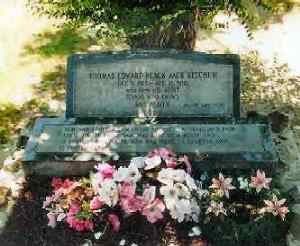
Black Jack Ketchum Grave


Thomas “Black Jack” Ketchum was the only person ever hanged in Clayton, New Mexico. He was also the only man ever hanged for train robbery in the entire state, a law that was later found to be unconstitutional. But, it was a little too late for poor Black Jack.

Remembering his experience long ago, a gentleman tells a story of meeting Black Jack Ketchum while camping at the Philmont Scout Ranch. He and several other scouts were backpacking through the mountains, visiting various historic sites, including an abandoned gold mine, a ghost town and one of Black Jack Ketchum’s outlaw hideouts.

The hideout was a large rock overhang and the scouts thought it would be fun to camp there for the night. However, their leader insisted that they stay at a nearby-designated site. Disappointed, several of the scouts set their tents up several hundred feet away from the leader’s tent, hoping they would have a chance to sneak back to the hideout later that night.

About 11:00 p.m., when the rest of the camp was fast asleep, five of the scouts gathered their sleeping bags and quietly stole back to the hideout. They set up camp under the overhang and built a fire, where they sat around talking about their trip. When the fire burned down to nothing more than red coals, the scouts settled down in their sleeping bags. The storyteller drifted off to sleep thinking about Black Jack. Suddenly, he was awakened by a noise in the bushes. He said that he felt paralyzed, unable to move and tried to call out to the others, but his throat was all knotted up.


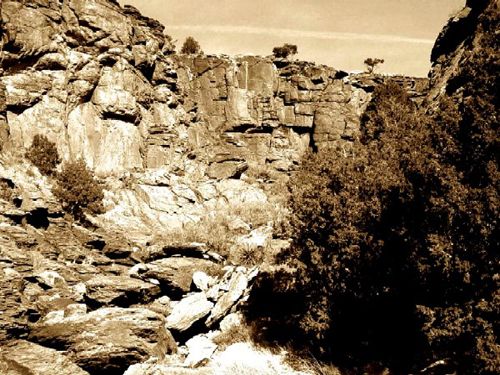
Black Jack and his gang often hid here in what is now called Black Jack Canyon near Raton, New Mexico.

Then he saw a cowboy, dressed all in black come running out of the bushes toward the hideout. He said the man was mostly solid but some parts of him appeared translucent. He described the man as filthy dirty, with a tattered hat, clothes from the 1800s, and terribly yellowed teeth. His face was very red, glistening with sweat, with lots of facial hair and the apparition held a revolver.

The cowboy was apparently unaware of the scout, but the boy was very scared, as much by his inability to move than by the man. As he watched, a strange fog emanated from the tree line across from a small stream and he could hear men yelling unintelligibly, and then muffled gunfire. The cowboy turned and fired his revolver six times into the trees and then ran and stood right over the scout. The cowboy was wounded in the shoulder and discharged six shell casings from his revolver right on top of the boy.

As he watched, the casings disappeared as they fell onto his sleeping bag. The cowboy then reloaded his revolver, fired additional shots into the trees, and suddenly the cowboy saw the scout. The expression on the cowboy’s face indicated that the scout had just suddenly appeared before his eyes. The cowboy seemed to be confused and confounded, while the scout was terrified. Then, the cowboy un-cocked his pistol, looking at the scout very closely, and said, “You’re not supposed to be here,” and then just disappeared into thin air.


Ghost Cowboy

Eventually, he was able to go back to sleep but had to be shaken repeatedly by his fellow campers before waking in the morning. As the scouts broke camp, the boy told his fellow campers about the “dream,” who were amused by the story. But, as the scout rolled up his sleeping bag, he found six shell casings in the dust.

Later, when they returned to base camp, the scout visited an old saloon, where a photograph of Black Jack Ketchum was displayed. The photograph was the same man that the scout had seen at the hideout.

When he told his friends, they brushed him off, as setting them up for a big hoax and the scout never told anyone about it again, but he kept the shell casings. After the scout returned home, he checked with a gun expert who said the casings were dated from sometime around 1878 but were in almost brand new condition and the gunpowder could still be smelt in them. In fact, the gunpowder was one that was used in the last century, but not today.

The scout kept the casings for years, but unfortunately, after he moved away from home, his mother threw them out along with several other items the boy had saved, such as comic books and baseball cards.
Read more >>

Haunted Oakland

In 2005-2006 I was a instructor and security for Salvation Army Adult Recovery Facility in Oakland's downtown, just next to 880 off Broadway. While teaching a 8pm evening class of 12 men in the dining hall , 9 of the men in class pointed out a dark gray shadow in kitchen area, which when I turned around saw as well, shadow was about 6' tall and moved through out kitchen , towards dining hall, back towards dock elevator There was no access to kitchen but from dock elevator (which closed at 6pm) or through dining hall. The light from dining hall well lite the kitchen area , myself and 3 of the guys from class walked through kitchen , down hallway to where elevator was located, elevator was up on out floor and we had to turn on hall / back room lights , yet shadow had disappeared. Being that I was security as well, I would do my rounds throughout facility and every time I passed the dining room, had a feeling that I was being watched. The night desk man claimed he saw shadow and felt as if he was being watched at times while at desk. He even says he had seen shadow by staff offices which are located on separate floor in same building. I returned a few years ago to talk with some of the instructors I knew while I worked there and the sightings still occurring.
Posted by JeffT JeffT
Read more >>

lady ghost on the second level of the hotel

One evening I was upstairs at the small hotel and I wanted to see what was up there so I climbed the stairand went around the hall,there standing was an attractive young lady, in an old fashioned dress, she had a wide lace collar it looked in hind sight like a maids uniform, she was standing next to an old sideboard that is sitting there as you round the hallway, I said "hello" to her as she was quiet and just stared at me  then I looked away embarrassed that she said nothing and  then looked up a few seconds late and she wasnt there anylonger, but where could she have gonein only 2 seconds? later that evening i could hear some very sad and mournful song with a very strange voice female also 
I later enquired about the music and was told no one was up there and the staff knew nothing about it?????? 
So, it seems I had seen an apparition, but on another day went in for lunch, and looked at the old time photos through the years and seems I saw the "lady" in a picture with the same wide lace collar in a photo from the early 1900's, eerrrrrrie!


By Teresa
Read more >>

The House On Sunnyside Road, Marysville Washington

I've lived in a house that was built, maybe in the 20's. But this place. Had. Ghosts. I lived there when I was 1 - 6 years old. My neighbor was an old woman. Very nice. Her husband died in the backyard cutting down tree's in the late 80's. but I think his ghost went into the wrong house and was pissed off. I can remember, For some reason every night I would walk out to the hallway for some odd reason. And i'd look down the hallway and see a Tall black figure with big smile and big white eyes (no pupils) and a spiky looking head. Then I'd here in a disembodied voise "HEY YOU!" and then it would levitate itself forward at me and make this weird music mouth drumming sound "chi chi CHI CHi chi chi CHI CHI chi chi CHI CHI" and i would run into my room and go back into my bunk bed (nobody slept on the bottom bunk) and then i would go under my covers and "chi chi CHI CHI chi chi CHI CHI HAHAHAHA 'dunnnnn' " and then i would go into blackness for a second and then this trippy yellowish background would pop up and then the spirit would be right in front of me smiling, then i'd hear it yelling cuss words at me and it would make me scared but i couldnt do anything! So then I would wake up and I would get pushed off the top bunk and cry. My parents still don't believe me. I want ghost adventures to go there. contact me for more info. -carterbradygregg@gmail.com


by Carter
Read more >>
If these ghost stories kept you up at night, buy me a coffee to stay awake too!
Booking.com