This blog is the best for google chrome.
Download
Website Online Counter

Wilson Creek, Missouri and the Bloody Hill Ghosts


Battle of Wilsons Creek near Springfield, Missouri 
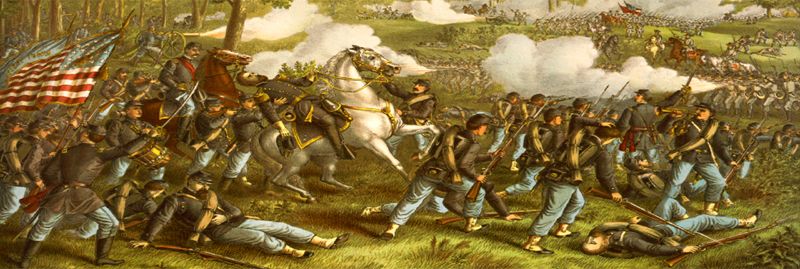
The Battle of Wilson’s Creek, Missouri, also known as Battle of Oak Hills and Battle of Springfield, was the first major battle of the Trans-Mississippi Theater of the Civil War. It was fought on August 10, 1861, in the officially neutral state of Missouri, however, its pro-South governor, Claiborne Fox Jackson, was secretly collaborating with Confederate troops.


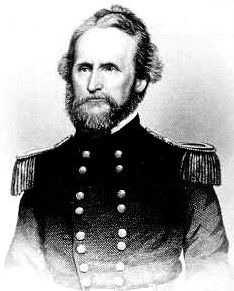
Nathaniel Lyon would go on to become a Brigadier General for the Union Army and die at the Battle of Wilson Creek in 1861.

On August 9, 1861, Brigadier General Nathaniel Lyon’s Union Troops were camped at Springfield, Missouri while a large Confederate force, under the command of Brigadier General Ben McCulloch, was quickly approaching, making camp at Wilson’s Creek about 12 miles southwest of Springfield. Both sides spent the evening formulating plans to attack the other on the following day.

The Battle of Wilson’s Creek, fought August 10, 1861, was a bitter struggle for control of Missouri in the Civil War’s first year. In fact, it was the first major battle in the West and only the second major battle of the Civil War.

About 5:00 am on the 10th, Lyon, in two columns commanded by himself and Colonel Franz Sigel, attacked the Confederates on Wilson’s Creek and the Rebel cavalry fell back away from what would become known a Bloody Hill. However, the Confederate forces soon rushed up and stabilized their positions, attacking the Union forces three different times, but failing to break through the Union line.

Lyon became the first Union General killed in combat during the battle and Major Samuel D. Sturgis replaced him.

Following the third Confederate attack, which ended at about 11:00 am, the Confederates withdrew. However, Sturgis realized that his men were exhausted and his ammunition was low, so he ordered a retreat to Springfield. The Confederates were too disorganized and ill-equipped to pursue. This Confederate victory buoyed southern sympathizers in Missouri and served as a springboard for a bold thrust north that carried the Missouri State Guard as far as Lexington. Wilson’s Creek, the most significant 1861 battle in Missouri, gave the Confederates control of southwestern Missouri. However, the loss was substantial with 1,317 Union and 1,222 Confederate casualties (killed, wounded or captured).

The Battle of Wilson’s Creek marked the beginning of the Civil War in Missouri. For the next three and a half years, the state was the scene of savage and fierce fighting, mostly guerrilla warfare, with small bands of mounted raiders destroying anything military or civilian that could aid the enemy. By the time the conflict ended in the spring of 1865, Missouri had witnessed so many battles and skirmishes that it ranks as the third most fought-over state in the Nation.

Today the restless spirits of war-torn Missouri still haunt Bloody Hill. While visiting the site of this old battleground, many have reported seeing the ghostly apparitions of these long-ago soldiers, hearing noises that only be described as guns and cannons, cold spots bearing no earthly explanation and, at night, the sounds of soldiers walking and talking in the nearby woods. Interestingly, more Confederate Soldiers are reported as being seen at this site than their opponent Union troops.


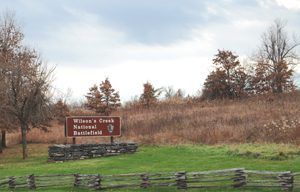
Wilson Creek Battlefield near Springfield, Missouri 

Recognized and maintained by the National Park Service as a National Battlefield, today the nearly pristine landscape allows visitors to experience one of the best-preserved battlefields in the Nation. Complete with visitor center and museum, along with research library, living history programs, self-guided auto tour and interpretive hiking trails, Wilson’s Creek is a must stop for history buffs.

More information:

Wilson’s Creek National Battlefield
6424 W. Farm Road 182
Republic, MO 65738
417-732-2662 x227
Read more >>

Haunted Springfield, Missouri

Long before the City of Springfield, Missouri was founded in 1833, the area was populated by Native Americans, who thrived on its rich resources. However, nine years after Missouri became a state in 1821, the U.S. Government forced the removal of the Indians to a reservation in Kansas and Greene County was opened for settlement, bringing in numerous white settlers who also enjoyed the areas rich resources. Years after the establishment of the city, the Butterfield Stage Coach line which brought even more people to the area and the town quickly began to grow.

Though war-torn during the Civil War years, Springfield survived to welcome Route 66 travelers in the 20th century, and eventually to become Missouri’s third largest city. With its long and rich history, spanning Old West pioneers through modern civilization, it should come as no surprise, that it is one of the Show-Me-State’s most haunted cities.
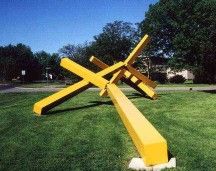

Phelps Grove park

Phelps Grove Park – On East Bennett Street, Phelps Grove Park encompasses some 44 acres that provide entertainment and beauty to area residents. It’s also allegedly home to a wandering spirit. though the park is quite old, the spirit is relatively new, evidently killed in an automobile accident. It was the day of her wedding and as she and her new groom drove through the park, the automobile went out of control and they were both killed. The “Bride under the Bridge” has often been spied near the third bridge in the park in the evening. The forlorn bride is usually seen standing, holding up the hem of her gown, but where her face should be, there is only darkness.

Bass Country Inn – A ghost known as Carl, who was a former busboy at this inn, is said to still haunt the premises. Staff have reported seeing him in the kitchen and in the halls. Others have reported seeing a pair of legs beneath a table, but when they crouch down, there is no one there. Carl has often been reported as having been seen just out of the corner of an eye disappearing into the office or down the hall, but upon closer inspection, no one is there. Carl is seemingly harmless, but others have reported another female spirit at the Inn, who isn’t very friendly. Both apparitions have been said to touch people. The Bass Country Inn is located off Highway 44 at North Glenstone Avenue.
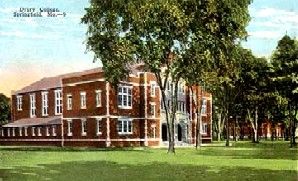

Drury College Springfield Missouri

Drury University – This old institution first opened its doors on September 25, 1873, with thirty-nine pupils in attendance. Beginning with a two-story brick structure at a cost of just $7,000 for classes, the campus occupied less than 1½ acres.

Next, a frame building was built for the music department and in 1875 an elegant brick structure was opened called “Walter Fairbank’s Hall” as a women’s boarding house. Twenty-five years later the 40-acre campus included Stone Chapel, the President’s House and three academic buildings. Today the 80-acre campus still includes the original site and much more, including a few phantom visitors according to its staff and students.

Old colleges often have many reports of hauntings, but this particular college has good reason as it was built upon a site which was once Indian burial grounds and later was in the midst of the Civil War. In 1966 Smith Hall, a women’s dormitory was built in an area that used to be called home to several old Victorian houses. In one of these old vintage homes once lived a little girl who was caught in a fire when she wanted to retrieve her teddy bear.

According to the stories, she continues to linger in the hall searching for her teddy bear. Many have witnessed the little girl, dressed in pink, and walking the halls. Others have reportedly taken pictures. A bit of a prankster, students have often returned to their rooms to find their locked doors standing wide open, drawers pulled out of dressers and a teddy bear sitting in the center of the room. Others report that if they have a teddy bear, it will often be moved during the night to appear at a different place in the room the next morning. One student tells a story of an unused telephone stored in a closet that would ring during the night with no source of power.

At Clara Thompson Hall, many students have reported that pianos seemingly play by themselves and doors are said to often close on their own. At the Wilhoit Theatre, many people have reported seeing flickering lights at night when no one is in the theatre.

Drury University is located at 900 North Benton Avenue at East Central Street.

Southwest Missouri State University – At the Freudenberger House, which is familiarly known as the Freddy House by the students, a female phantom is said to haunt the building. The five-story residence hall houses the Military Science Department as well as playing home to over 700 students. Built in 1959, the hall was named for Norman Freudenberger, professor of Latin for 45 years. According to the legends, the matronly ghost is referred to as the Dorm Mom and seemingly has an interest in the fifth floor, where she is most often glimpsed. Freudenberger House is located at 1000 E. Madison Street.
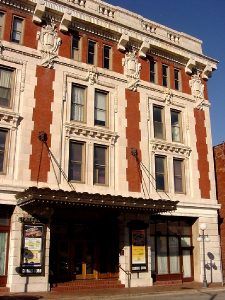

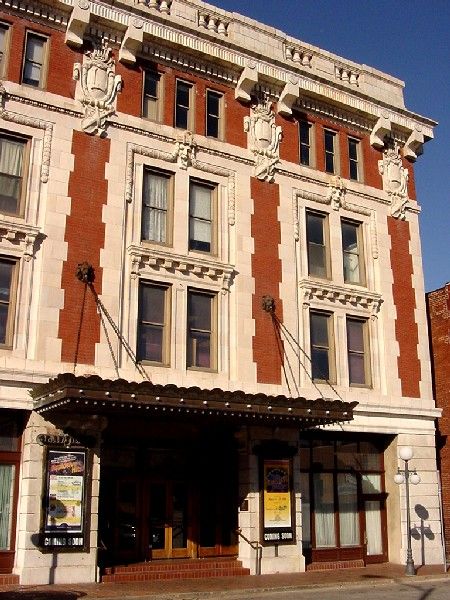
Landers Theater in Springfield, Missouri

Landers Theater – Built in 1909, this four-story brick and terra cotta building has been in continuous use since its inception. Once playing host to such artists as Lillian Russell, John Philip Sousa, Lon Chaney and Fanny Brice, it later became a motion picture house — one of the first to acquire “talkies.”

In 1977, it was placed on the National Register of Historic Places and in the 1980s the theatre underwent major renovations to return it to its early 1900s elegance. Today the theatre continues to entertain southwest Missouri with plays, musicals, ballet, symphony and more.

But in addition to its many visitors who come for the entertainment, this old “playhouse” is also called home to several restless spirits. The one most often seen is that of a janitor who died during a fire in the theatre in the early twentieth century. On December 17, 1920, the Landers Theatre suffered a major fire, taking the life of the janitor and effectively closing the theatre for some time. Only an asbestos curtain and other fireproofing precautions kept the theater from being a total loss. According to reports, the old janitor is often seen up in the balcony by actors on the stage.

There is another story of a baby that was accidentally dropped from the upper balcony on a night long ago. Today, when actors are practicing on stage they often say that the baby repeats its fall over and over again. Others have heard the baby crying, followed by comforting words from its ghostly mother.
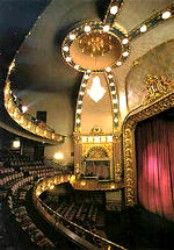

Landers Theater Interior

Another apparition, only seen from outside the theatre, is said to peek from a fourth-floor window at passersby along the street. Described as tall with long blonde hair and wearing Elizabethan clothing, this spirit has never been seen inside the theatre.

Strange occurrences at the theatre include unplugged spotlights that seemingly turn on and off of their own accord, people who sense that they are being followed, taps felt on people’s shoulders by unknown entities, and apparitions glimpsed throughout the building.

The theatre is located at 311 E. Walnut.

Springfield National Cemetery – This old cemetery was established in the 1860s and holds the remains of several Civil War soldiers, some of which are apparently restless. Visitors to the cemetery have reported seeing glowing gravestones in the night and several others have walked away with photographs that include strange apparition appearing subjects and dozens of orbs. The cemetery is located at 1702 East Seminole Street in downtown Springfield at the cross street of Glenstone Avenue (US 65).

University Plaza Hotel – Unlike many quaint inns and motels, the Plaza Hotel is not proud of its resident ghost. Touting itself as Springfield’s premier meeting place and convention center, it fears that knowledge of the spirit will hurt its business. However, “The Colonel,” as he has become known, has been seen by most everyone who works at the Convention Center. The towering hotel is built upon land that was once a large plantation belonging to a well-decorated Civil War hero. This older gentleman, dressed all in black is most often seen between midnight and 4:00 a.m. in the ballroom and in the back hallways of the hotel. The University Plaza Hotel is located at South John Q. Hammons Pkwy at the cross street of East Saint Louis Street.
Read more >>

Phantom Dragoon of the Delaware River

The height that rises a mile or so to the south of Newark, Delaware, is called Iron Hill because it is rich in hematite ore. But about the time of General William Howe’s advance to the Brandywine River, it might well have won its name because of the panoply of war — the sullen guns, the flashing swords, and glistening bayonets — that appeared among the British tents pitched on it.

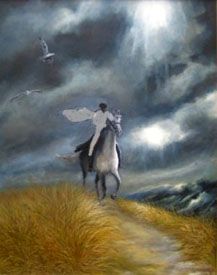
After the red-coats had established a camp here the American outposts were advanced and one of the pickets was stationed at Welsh Tract Church. On his first tour of duty, the sentry was thrown into great alarm by the appearance of a figure robed from head to foot in white, that rode a horse at a charging gait within ten feet of his face. When the guard was relieved the soldier begged that he might never be assigned to that post again. His nerves were strong in the presence of an enemy in the flesh — but an enemy out of the grave! Ugh! He would desert rather than encounter that shape again. His request was granted.

The sentry who succeeded him was startled, in the small hours, by a rush of hoofs and the flash of a pallid form. He fired at it and thought that he heard the sound of a mocking laugh come back.


White horse

Every night the phantom horseman made his rounds, and several times the sentinels shot at him without effect, the white horse and white rider showing no annoyance at these assaults.

When it came to the turn of a skeptical and unimaginative old corporal to take the night detail, he took the liberty of assuming the responsibilities of this post himself. He looked well to the priming of his musket, and at midnight withdrew out of the moonshine and waited, with his gun resting on a fence. It was not long before the beat of hoofs was heard approaching, and in spite of himself, the corporal felt a thrill along his spine as a mounted figure that might have represented Death on the pale horse came into view; but he jammed his hat down, set his teeth, and sighted his flint-lock with deliberation.

The rider was near, when bang went the corporal’s musket, and a white form was lying in the road, a horse speeding into the distance. Scrambling over the fence, the corporal reassured, ran to the form and turned it over: a British scout, quite dead. The daring fellow, relying on the superstitious fears of the rustics in his front, had made a nightly ride as a ghost, in order to keep the American outposts from advancing, and also to guess, from elevated points, at the strength and disposition of their troops. He wore a cuirass of steel, but that did not protect his brain from the corporal’s bullet.
Read more >>

Riders of the Desert

Among the sandstone columns of the Colorado foot-hills stood the lodge of Ta-in-ga-ro (First Falling Thunder). Though swift in the chase and brave in battle, he seldom went abroad with neighboring tribes, for he was happy in the society of his wife, Zecana (The Bird). To sell beaver and wild sheep-skins he often went with her to a post on the New Mexico frontier, and it was while at this fort that a Spanish trader saw the pretty Zecana, and, determining to win her, sent the Indian on a mission into the heart of the mountains, with a promise that she should rest securely at the settlement until his return.

On his way, Ta-in-ga-ro stopped at the spring in Manitou, and after drinking, he cast beads and wampum into the well in oblation to its deity. The offering was flung out by the bubbling water, and as he stared, distressed at this unwelcome omen, a picture formed on the surface–the anguished features of Zecana.

He ran to his horse, galloped away, and paused neither for rest nor food till he had reached the post. The Spaniard was gone. Turning, then, to the foot-hills, he urged his jaded horse toward his cabin, and arrived, one bright morning, flushed with joy to see his wife before his door and to hear her singing. When he spoke she looked up carelessly and resumed her song. She did not know him. Reason was gone.


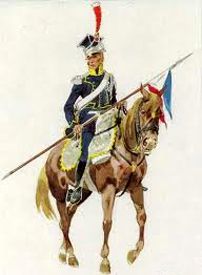
Spanish Mounted Lancer

It was his cry of rage and grief, when, from her babbling, Ta-in-ga-ro learned of the Spaniard’s treachery, that brought the wandering mind back for an instant. Looking at her husband with a strange surprise and pain, she plucked the knife from his belt. Before he could realize her purpose she had thrust it into her heart and had fallen dead at his feet. For hours he stood there in stupefaction, but the stolid Indian nature soon resumed its sway.

Setting his lodge in order and feeding his horse, he wrapped Zecana’s body in a buffalo-skin and then slept through the night in sheer exhaustion. Two nights afterward the Indian stood in the shadow of a room in the trading fort and watched the Spaniard as he lay asleep. Nobody knew how he passed the guard.

In the small hours the traitor was roused by the strain of a belt across his mouth, and leaping up to fling it off, he felt the tug of a lariat at his throat. His struggles were useless. In a few moments, he was bound hand and foot. Lifting some strips of bark from the low roof, Ta-in-ga-ro pushed the Spaniard through the aperture and lowered him to the ground, outside the enclosure of which the house formed part. Then, at the embers of a fire, he kindled an arrow wrapped in the down of cottonwood and shot it into a haystack in the court. In the smoke and confusion thus made, his own escape was unseen, save by a guardsman drowsily pacing his beat outside the square of buildings. The sentinel would have given the alarm, had not the Indian pounced on him like a panther and laid him dead with a knife-stroke.

Catching up with the Spaniard, the Indian tied him to the back of a horse and set off beside him. Thus they journeyed until they came to his lodge, where he released the trader from his horse and fed him, but kept his hands and legs hardbound and paid no attention to his questions and his appeals for liberty. Tying a strong and half-trained horse at his door, Ta-in-ga-ro placed a wooden saddle on him, cut off the Spaniard’s clothes, and put him astride of the beast. After he had fastened him into his seat with deer-skin thongs, he took Zecana’s corpse from its wrapping and tied it to his prisoner, face to face.

Then, losing the horse, which was plunging and snorting to be rid of his burden, he saw him rush off on the limitless desert and followed on his own strong steed. At first, the Spaniard fainted; on recovering he struggled to get free, but his struggles only brought him closer to the ghastly thing before him. Noon-day heat covered him with sweat and blood dripped from the wales that the cords cut in his flesh. At night he froze uncovered in the chill air, and, if for an instant his eyes closed in sleep, a curse, yelled into his ear, awoke him. Ta-inga-ro gave him a drink from time to time, but never food, and so they rode for days. At last hunger overbore his loathing, and sinking his teeth into the dead flesh before him he feasted like a ghoul.


Ghost Rider

Still, they rode, Ta-in-ga-ro never far from his victim, on whose sufferings he gloated until a gibbering cry told him that the Spaniard had gone mad. Then, and not till then, he drew rein and watched the horse with its dead and maniac riders until they disappeared in the yellow void. He turned away but nevermore sought his home. To and fro, through the brush, the sand, the alkali of the plains, go the ghost riders, forever.
Read more >>
Booking.com